Tree Service in El Cajon, CA
Land Clearing
Land clearing for El Cajon properties overgrown with brush, dead trees, stumps, and debris, starting with a free on-site estimate.
Tree Service in El Cajon, CA
Land clearing for El Cajon properties overgrown with brush, dead trees, stumps, and debris, starting with a free on-site estimate.
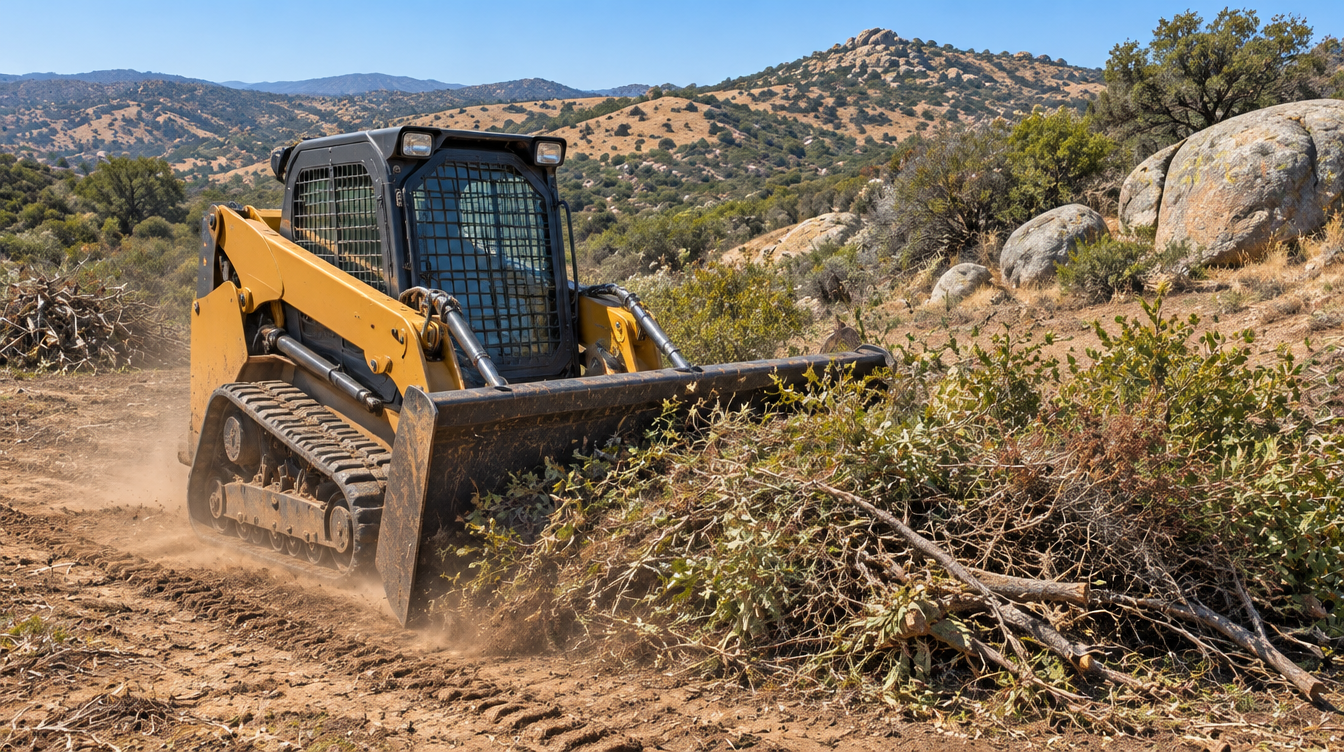
Oak Canyon Tree Service handles land clearing in El Cajon, CA: removing overgrown brush, unwanted or dead trees, stumps, and leftover debris so a lot is open, usable, and easier to protect. It is for homeowners and rural property owners who are staring at a yard or hillside they can no longer walk, build on, or feel comfortable about. To get started, call or send a request and we will set up a free on-site estimate.
Maybe the weeds have taken over a back acre, a pile of dead brush has been growing for years, or a few volunteer trees have turned a flat pad into a thicket. Perhaps you bought a property that was left alone too long and you cannot even tell where the fence line runs. The next step is simple: walk the property with someone who can read it, decide what stays and what goes, and put that plan in writing.
Land clearing means taking a property from overgrown to open. On most East County lots that is a combination of several tasks rather than one, and we scope each job around what you actually need.
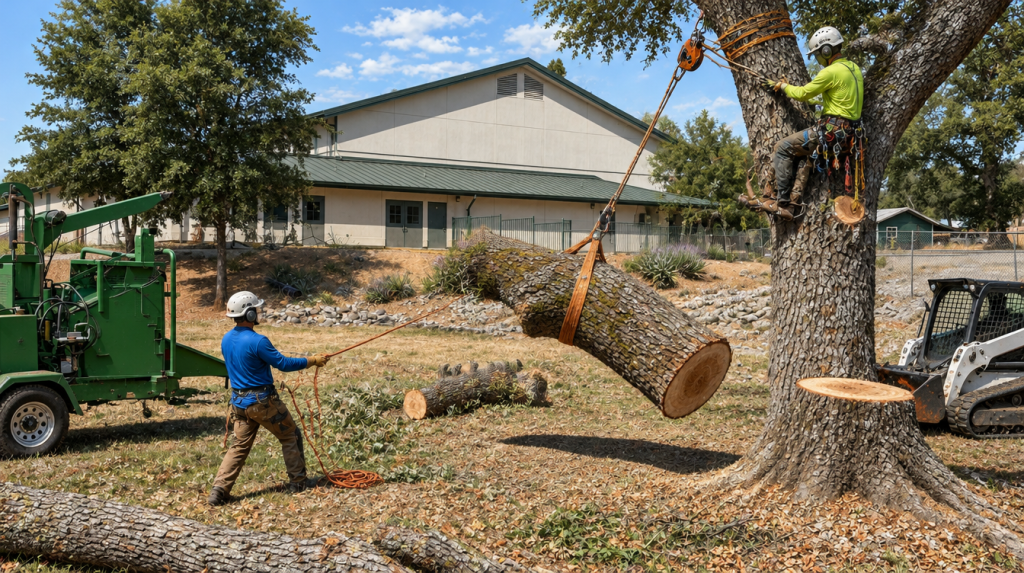
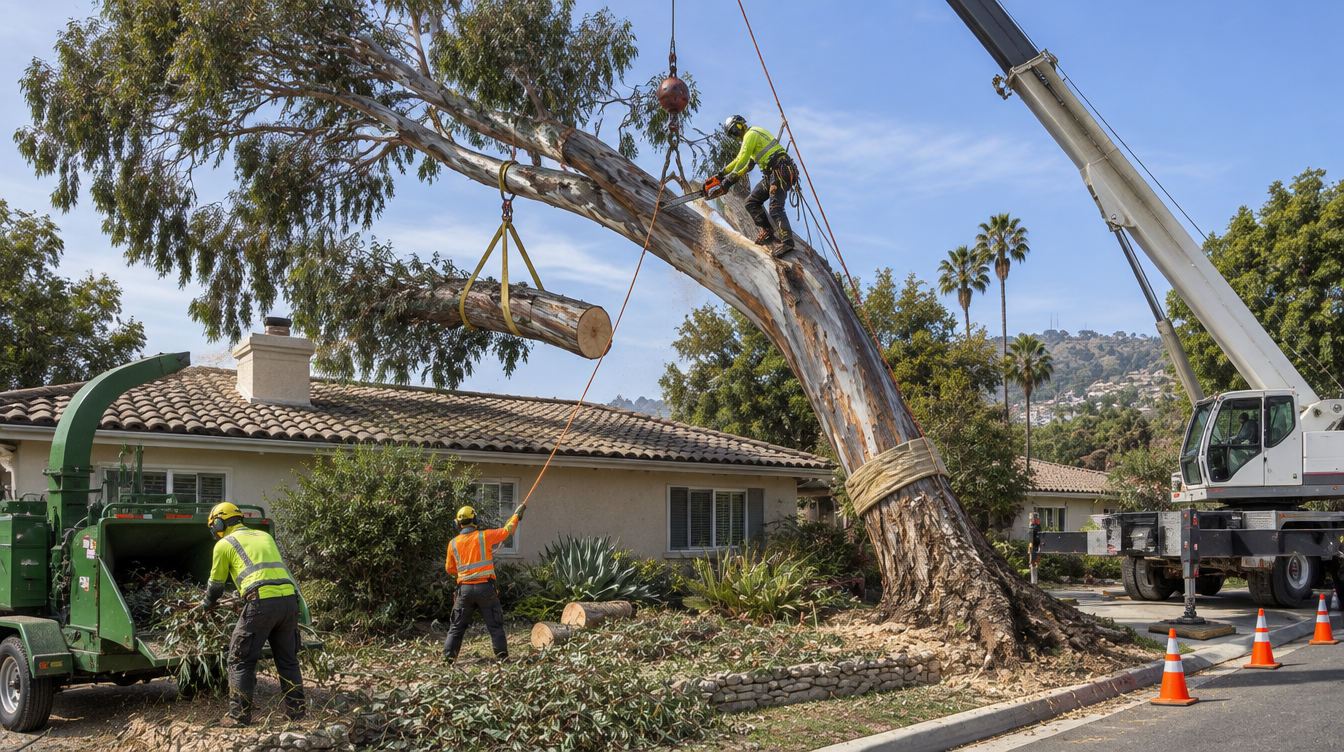
Trees are usually the slowest part of any clearing job. Each one has to be judged on size, lean, and what sits below it, such as a fence, shed, or roofline. Stumps are a separate decision: some owners want them ground below grade, others want them left for now. Say which you prefer so the written scope matches.
Brush looks easy until you see the volume. Years of dry growth add up to a lot of material, and hauling it off is often a big part of the job. A good plan states what leaves the property and what, if anything, stays.
In and around El Cajon, many lots are sloped, rocky, and dotted with oaks and native scrub. Growth that looks green in spring typically turns to dry fuel by late summer, so overgrown ground becomes a bigger concern as fire season approaches.
These two get mixed up often. Land clearing is the broader job: opening up a property by removing brush, trees, stumps, and debris across an area. Defensible space clearing is narrower and aimed at the zone around structures, with a focus on reducing fuel near the home. Both involve cutting and hauling, so they overlap, and we handle both. This page covers the full-lot version.
Grading, excavation, and soil leveling after the clearing are separate work. If you need something like that, ask us and we can talk through how it fits with the clearing.
Because the estimate is done on site, the quote comes from what the property really looks like, not a guess from a photo.
Land clearing is priced by the job, and the details matter more than the acreage alone. The main factors are:
A clear written quote should spell out the exact areas included, which trees and stumps are covered, what happens to the debris, any extras priced separately, and how changes are handled if you add or drop work once the crew is on site. If a quote is one line with no detail, ask for more.
East County has a long dry season, and most owners want clearing finished before vegetation dries out completely. Spring and early summer are typically popular, so scheduling earlier gives you more choice. Wet weather can slow access on soft or sloped ground, so winter work is often planned around dry stretches. Ask for a realistic window during your estimate.
It depends on acreage, density, and how many trees and stumps are involved. A small overgrown yard may be quick, while a large, brushy lot with slopes takes longer. The on-site estimate is where timing gets pinned down.
Fast-growing brush returns, so many owners clear a lot once and then keep up with shorter follow-up cuts. How often depends on how quickly the growth comes back and how you use the land.
By scope: area, vegetation density, tree count and size, stump work, slope and access, and hauling. The written estimate lays these out so you can see what drives the number.
Not always, but it helps at the start so you can point out boundaries and trees to keep. After the scope is clear, many owners step back while the crew works.
Yes, selective clearing is common. Mark or discuss the oaks and other trees you want to save during the estimate, and the written scope will reflect that.
Trimming shapes or reduces trees that stay. Land clearing removes vegetation and often whole trees and stumps to open the ground. If you are unsure which you need, we can sort it out on site.
Our Service Standard
Danny walks your property, looks at each tree, and explains what he recommends and why.
Your crew follows a clear written plan, so there are no surprises about what gets trimmed, removed, or hauled.
We clear branches, wood, and debris before we leave so your yard is ready to enjoy again.
A Few Common Questions
Tell us about the trees on your property and we will set up a free on-site visit. You will get a written scope of work before anything starts.