Tree Service in El Cajon, CA
Dead Tree Removal
Dead tree removal for El Cajon homeowners, with a free on-site estimate and full cleanup.
Tree Service in El Cajon, CA
Dead tree removal for El Cajon homeowners, with a free on-site estimate and full cleanup.
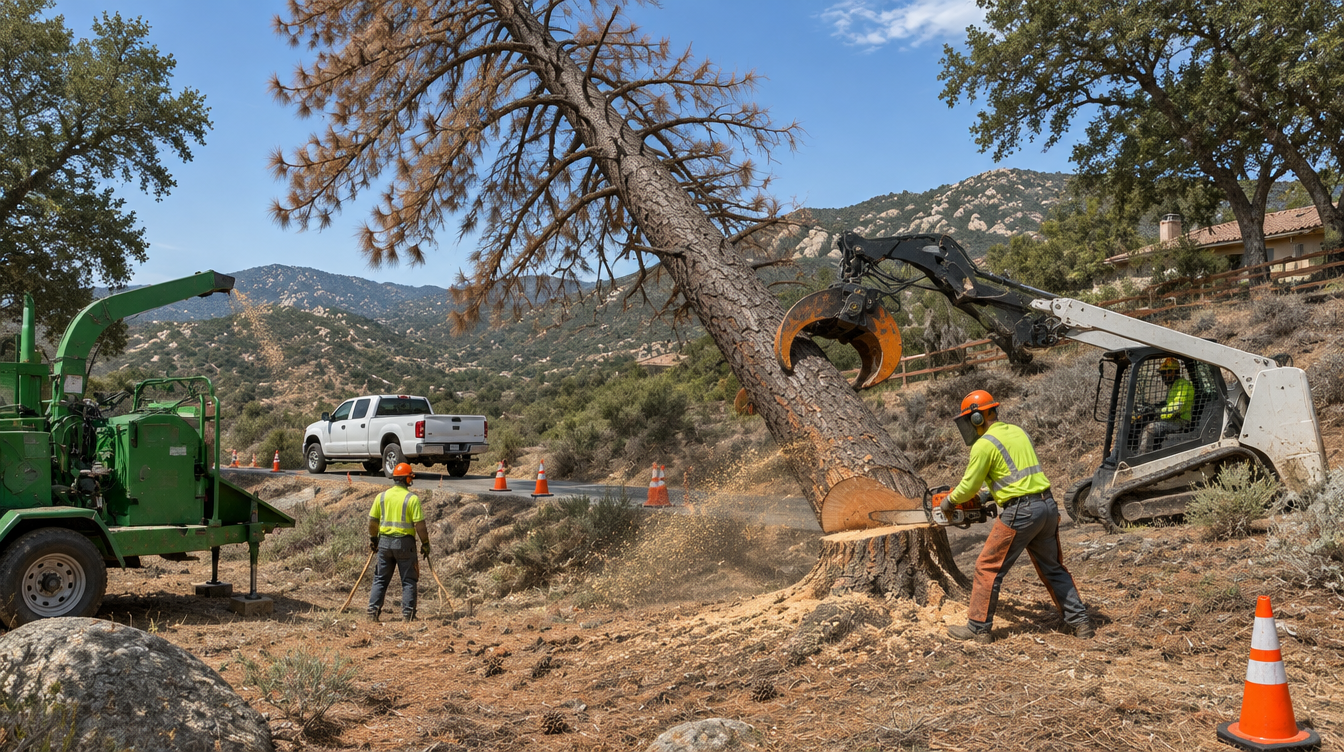
Dead tree removal from Oak Canyon Tree Service covers felling or sectioning down a dead or dying tree on your El Cajon property, cutting it up, and clearing the debris. It is for homeowners with a tree that has gone bare, is dropping limbs, or is leaning over a house, fence, driveway or play area. To get started, call or send a request and we will set up a free on-site estimate.
Maybe the tree never leafed out this spring. Maybe bark is sliding off in sheets, or a limb came down on a calm afternoon and you keep glancing at what is left up there. A dead tree does not get safer with time. The wood dries out and turns brittle, and the next big wind can bring down parts of it with no warning. The sooner someone looks at it, the more options you have for how and when it comes down.
Not every thinning tree is a dead one, and that matters because a stressed tree can sometimes recover. Here is what we look for when we walk a yard.
If you are unsure, that is what the estimate visit is for. Danny will look at the tree himself and tell you whether it is truly gone, whether it needs trimming instead, or whether it should come down.
East County San Diego is dry for much of the year, and long stretches of drought stress trees. Stressed trees are more vulnerable to beetles, borers and root problems. Coast live oaks, pines, eucalyptus and many ornamental trees can decline over several seasons before the damage is obvious from the street. Overwatering around established oaks, construction near roots, and compacted soil can also do harm. Many El Cajon lots have slopes, rocky ground or tight side yards, which affects how a dead tree is reached and brought down.
Dead trees also dry into fuel. Where fire season is a real concern, removing a dead tree close to a home is often a priority, along with clearing dead material beneath it.
Every job is a little different, but most dead tree removals follow the same path.
Homeowners often mix these up, so here is where this page stops.
Dead tree removal means the whole tree comes down. If only some limbs are dead and the tree is otherwise sound, you may want tree trimming or tree pruning instead, which are separate services we also do. Taking out a dead crown or hazardous limbs can sometimes make sense for a valuable oak.
The stump is another common question. Removal leaves a stump at the base unless your scope says otherwise. Stump grinding and stump removal are their own services, and we can quote them with the removal so you know the full picture before work begins.
We do not guess at numbers over the phone because dead trees vary too much. These are the real factors:
A clear written quote should spell out exactly which trees are included, what happens to the debris, whether the stump is part of the price, and how changes are handled if the crew finds something unexpected. If you add a tree on the day, you should get the change in writing too.
Whoever you hire, these are reasonable standards to hold the work to:
Before you hire anyone for tree work in El Cajon, ask:
Call or send a request through the site and tell us the tree type, roughly where it sits on the property, and anything it could hit. Photos help. Danny will then come out for the free estimate, and you will get a written scope before any work is scheduled. We live and work in East County, so we know the lots, trees and conditions you are dealing with.
Scratch a small twig. Green and moist under the bark usually means life, while dry and brown means it is likely dead. Some trees drop leaves in dry spells, so a walk-through is the surest way to tell.
Many are done within a single day, though large trees, difficult access or added stump work can stretch that. Your written scope will cover what to expect for your tree.
Sooner is generally better, especially if it stands near a structure, a driveway, or where people gather. Dead wood weakens over time, and scheduling an estimate early gives you the most flexibility.
It comes from the size and condition of the tree, how hard it is to reach, what is nearby, how it must be taken down, and what cleanup and extras you want. The written estimate lays all of that out.
Unless the scope says otherwise, the stump stays. Stump grinding and stump removal are separate services we can add to the quote if you want it gone.
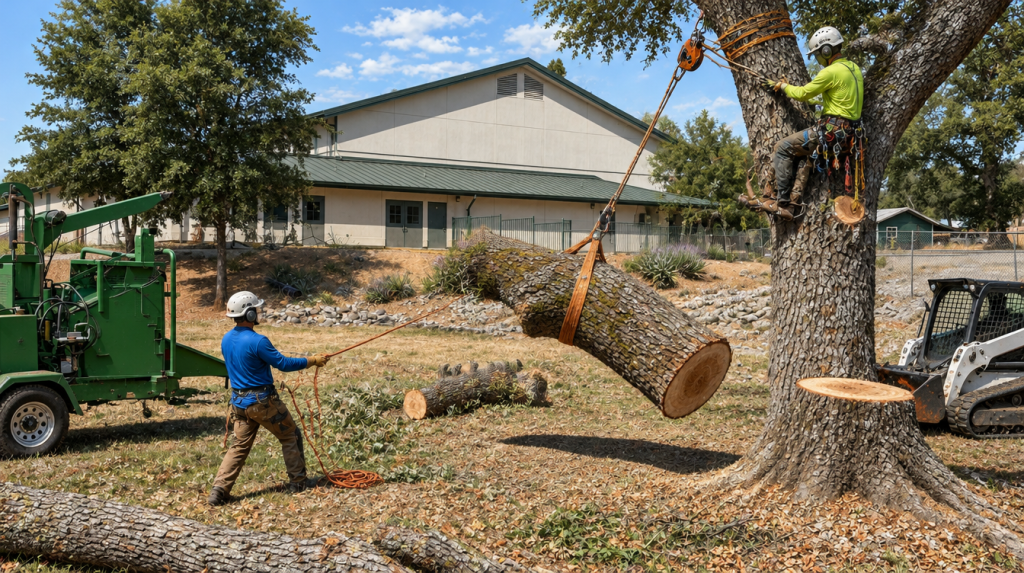
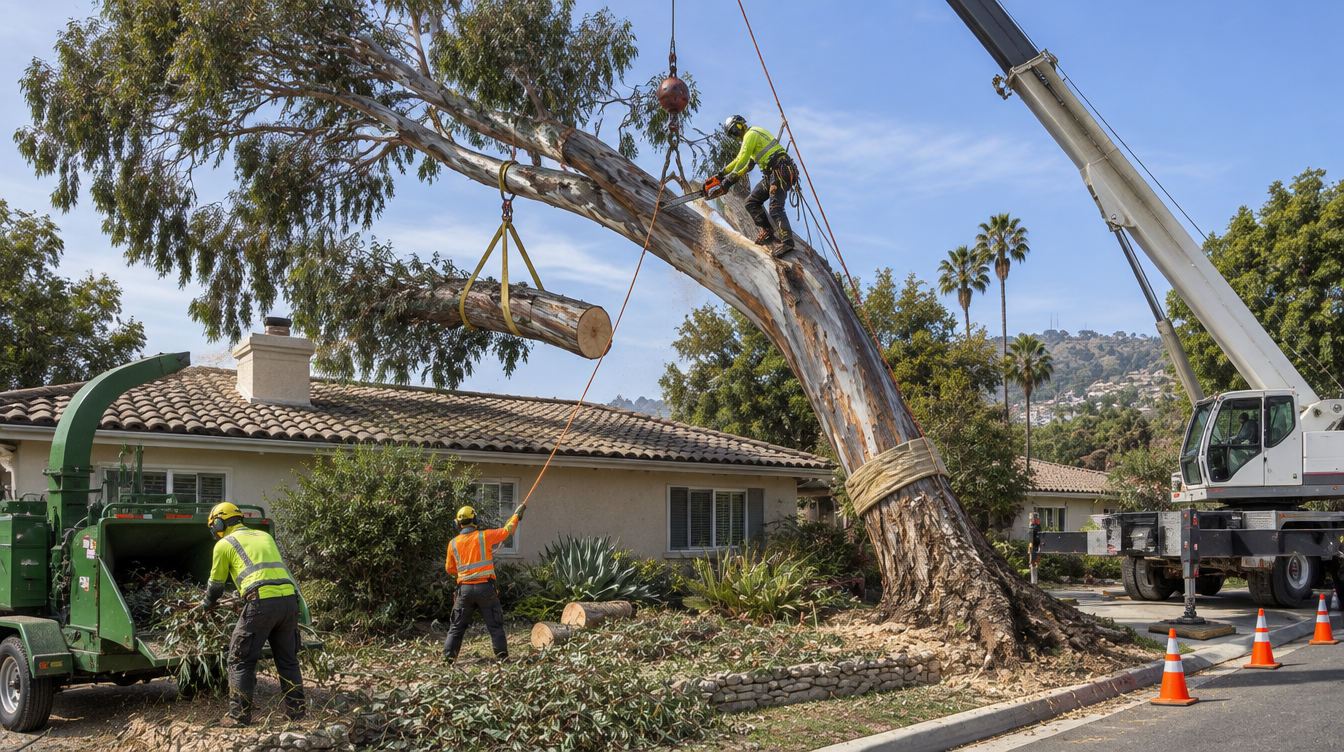
Yes. Trees close to structures are usually taken down in controlled sections rather than dropped whole. The on-site estimate is where we work out the safest approach.
Our Service Standard
Danny walks your property, looks at each tree, and explains what he recommends and why.
Your crew follows a clear written plan, so there are no surprises about what gets trimmed, removed, or hauled.
We clear branches, wood, and debris before we leave so your yard is ready to enjoy again.
A Few Common Questions
Tell us about the trees on your property and we will set up a free on-site visit. You will get a written scope of work before anything starts.