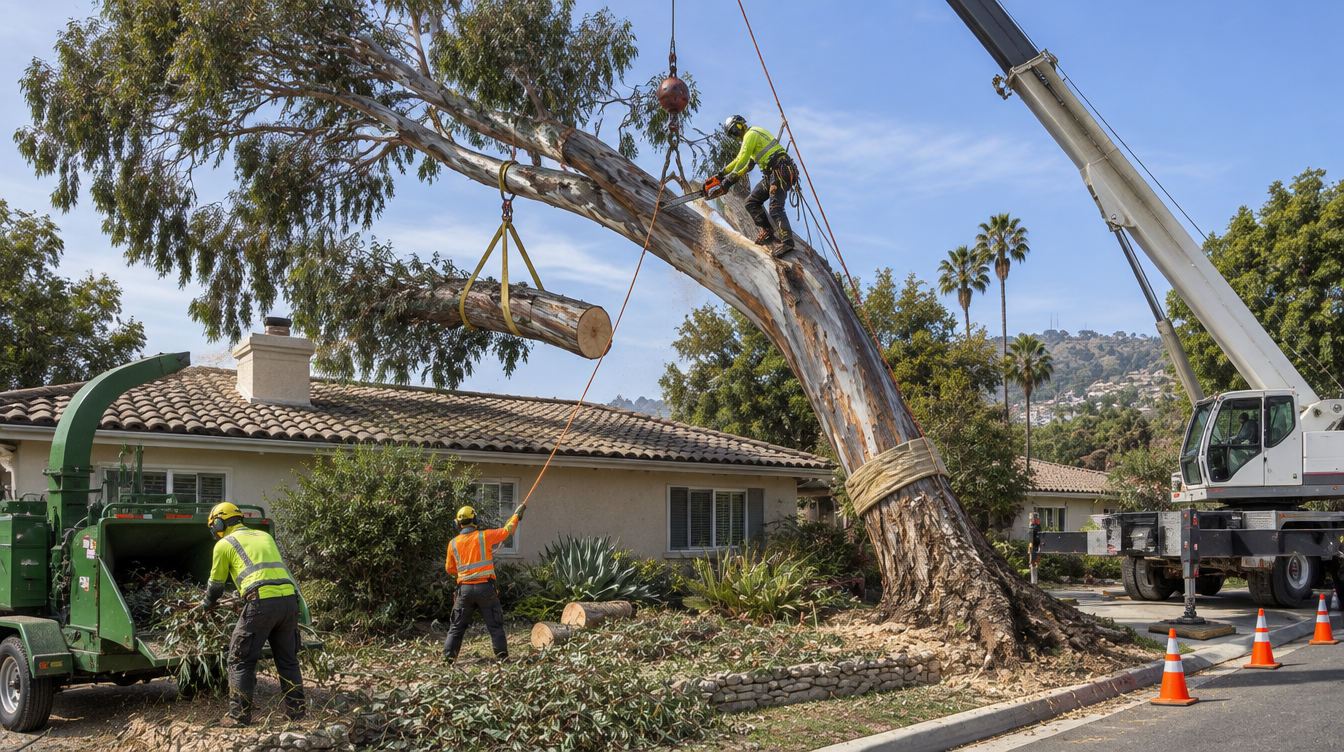
Hazardous tree removal from Oak Canyon Tree Service covers taking down trees in El Cajon, CA that are leaning, cracked, rotting, split by storms, or standing too close to a home, fence, driveway, or play area. It is for homeowners who have spotted a warning sign and want a straight answer about the risk. Call or send a request, and owner Danny Whitaker will come out for a free on-site estimate.

Maybe a limb dropped after a Santa Ana wind, or you noticed a crack in the trunk, mushrooms at the base, or soil lifting on one side of a tree that never used to lean. Those are the moments when waiting feels easier than calling. Until someone looks at it, keep cars, kids, and pets out from under the tree, take a few photos from a safe distance, and request an estimate so you know what you are dealing with.


Signs a tree is hazardous

Not every ugly tree is dangerous, and not every dangerous tree looks ugly. These are the warning signs that most often lead to a removal call:

  1. Leaning with disturbed roots. A tree that has always leaned is usually fine. A tree that has recently shifted, with cracked or heaved soil on the opposite side, is a different story.
  2. Cracks and splits. Vertical cracks in the trunk or splits where major branches join the trunk can mean the wood is failing.
  3. Decay and fungus. Mushrooms or shelf-like growths at the base, soft or crumbling wood, and hollow sounds when you tap the trunk point to internal rot.
  4. Dead or hanging limbs. Bare branches in an otherwise leafy crown, or broken limbs caught up in the canopy, can come down without warning.
  5. Storm damage. Torn bark, snapped tops, and half-uprooted trees rarely recover and tend to get worse with the next wind.
  6. Root damage. Trenching, grading, or construction near the trunk can cut the roots that hold a tree upright.

What the job covers

Hazardous tree removal is about getting a risky tree down safely and leaving the site clean. Depending on the tree and where it stands, the work can include:

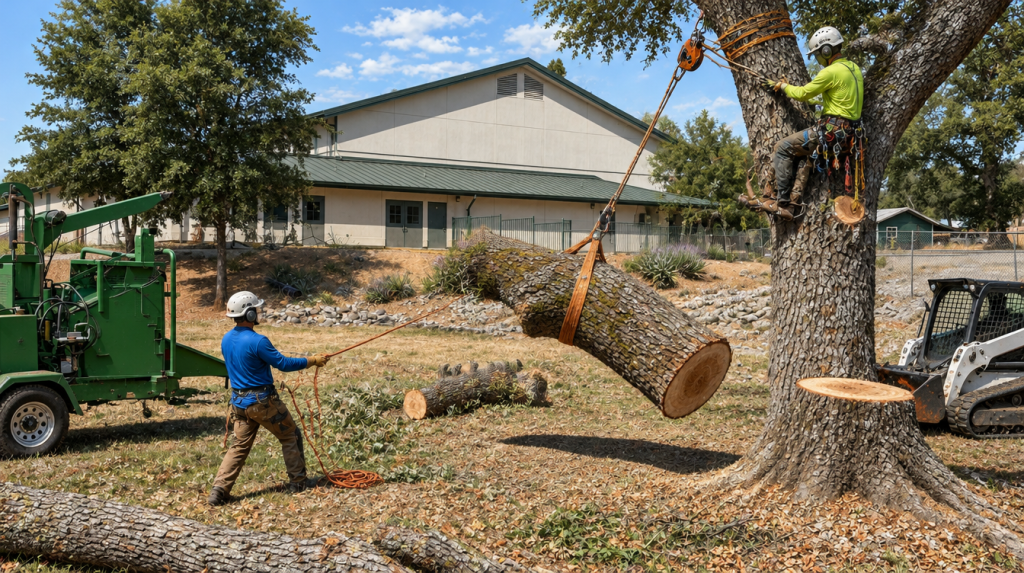
  • Technical, section-by-section removal when a tree hangs over a roof, garage, or fence and cannot simply be dropped
  • Taking down leaning, cracked, or storm-split trees before they fail on their own
  • Removing dead or decayed trees that are no longer stable enough to climb or leave standing
  • Clearing broken limbs and debris from a tree that has already partly come down
  • Full cleanup of the work area before we leave

The stump is a separate step. If you want it gone, we can quote stump grinding or stump removal alongside the tree so it all happens in one visit plan.


El Cajon trees and conditions

East County has its own set of tree stresses, and knowing them helps you read what you are seeing in your yard.

Oaks, drought, and heat

Coast live oaks are common across the area, and many are decades old. Long dry stretches can stress them, and large oaks may drop limbs in hot weather with little warning. Dense canopy, dead interior branches, and decay at old pruning wounds are worth a closer look. Many oaks can be saved with careful work, and an honest estimate should tell you which situation you have.

Wind, rain, and hillside lots

Most of the damage we see follows strong offshore winds in fall or heavy winter rain after a dry season. Saturated soil can loosen roots, and sloped or rocky lots often give trees less anchoring than they appear to have. A tree that looked fine in September may be leaning by February.


Removal or trimming?

Homeowners often assume a worrying tree has to come down, or that a quick trim will solve everything. Both can be true, depending on the tree.

Trimming and pruning take out weight, dead wood, or a problem limb while the tree stays. Hazardous tree removal is for trees where the trunk, roots, or overall structure is the problem, so cutting back branches will not make it safe. This page covers removal. If the tree can be saved with trimming or pruning, Danny will tell you during the estimate, and those are separate services we can quote instead.


How the visit works

  1. Estimate on site. Danny looks at the tree, the lean, the access, and what sits underneath it. This is free.
  2. Written scope. You get the plan on paper: what comes down, what is hauled off, and what is not included. Our crew follows it to the letter.
  3. Scheduling. You and we agree on a day. A tree that is actively failing gets prioritized in the conversation.
  4. The removal. The crew sets up around the drop zone and takes the tree down in the way the site allows, whether that is in sections or in one piece.
  5. Cleanup. We clear the work area before leaving.

What good work looks like

Use these standards to judge any tree company, including us:

  • The crew looks at the whole situation first, including the tree, the structures, the fence lines, and any wires, before a saw starts.
  • Cutting is planned so pieces do not land on roofs, landscaping, or irrigation. Sectional work should be controlled, not improvised.
  • Anyone near the work wears the usual protective gear and the crew keeps people and pets out of the drop zone.
  • Trees touching or near utility lines are handled with extra caution, and the plan acknowledges that up front.
  • The yard is raked and cleared when they are finished, not left for you to sort out.

What affects the cost

Two removals that look similar from the street can price very differently. The main factors are:

  • Height, trunk diameter, and overall size of the tree
  • What it is near, such as a house, pool, fence, or wires, and how much extra care that demands
  • Access for the crew, including gates, slopes, and tight side yards
  • Whether the tree can be dropped whole or has to come down in sections
  • The condition of the wood, since decayed or storm-damaged trees take more caution
  • Hauling away the wood and debris versus leaving it
  • Stump grinding or removal added on afterward

A clear written quote should spell out the scope, which trees are included, what happens to the debris, what is excluded, and how changes are handled if something unexpected turns up once the work begins.


Questions to ask before hiring

  1. Are you licensed and insured for this work? Ask for proof of liability and workers' compensation coverage, and check any license or permit that applies.
  2. What exactly is included? Get it in writing: removal, hauling, cleanup, and stump work.
  3. Who will do the estimate, and who will be on the crew? The person who sees the tree should know what the job involves.
  4. How will you protect my house, fence, and landscaping? A good answer is specific to your yard.
  5. When can you schedule, and how will you keep me updated? You should know what to expect before the day arrives.

Common questions

How do I know if my tree needs to come down or just needs trimming?

If the problem is in the branches, such as dead limbs or excess weight, trimming or pruning may be enough. If the trunk is cracked, the base is decaying, or the roots are lifting, removal is usually the safer call. An on-site look is the only reliable way to tell.

How long can I wait on a leaning or cracked tree?

There is no safe timeline for a tree that is actively shifting or splitting. Wind or rain can finish the job at any time, so book an estimate soon and keep people and vehicles away from it in the meantime.

Is there a best season for removing a hazardous tree in El Cajon?

Removal can happen any time of year, and a risky tree should not wait for a convenient season. Many homeowners call after fall winds or winter storms, so schedules can fill up then. Calling when you first notice a problem usually gives you more options.

How is the price for a hazardous removal worked out?

It comes down to the size of the tree, how hard it is to reach, what is underneath it, whether it must come down in sections, and how much hauling and cleanup is involved. Danny sees those details at the free estimate and puts the scope in writing.

Will the stump be removed too?

Removal takes down the tree, and the stump is a separate item. If you want it ground or removed, ask for it to be added to the written scope so it is priced up front.

What should I do before the crew arrives?

Move vehicles, patio furniture, and anything breakable out of the area around the tree, and make sure the crew has clear access to the yard. If you have questions about a gate, a pet, or a neighbor's fence, mention them when you call or send your request.

Our Service Standard

How We Work

Free On-Site Estimates

Danny walks your property, looks at each tree, and explains what he recommends and why.

Written Scope of Work

Your crew follows a clear written plan, so there are no surprises about what gets trimmed, removed, or hauled.

Full Cleanup

We clear branches, wood, and debris before we leave so your yard is ready to enjoy again.
Tree removal rigging in El Cajon

A Few Common Questions

Let’s Make the Next Step Clearer

Do you offer free estimates?
Yes. Every job starts with a free on-site estimate from owner Danny Whitaker. He looks at the trees, talks through your goals, and puts the plan in a written scope of work.
What areas do you serve?
We serve El Cajon, Lakeside, Santee, La Mesa, Alpine, Ramona, Spring Valley, Jamul, Lemon Grove, Poway, Rancho San Diego, and the rest of East County. If you are nearby but not listed, call and ask.
Do you handle emergency tree work after storms?
Yes. We offer 24/7 emergency storm response for fallen trees, broken limbs, and hazards over homes or driveways. Call us and we will get a crew headed your way as quickly as we can.
Are you licensed and insured?
Yes. Oak Canyon Tree Service is licensed, insured, and locally owned. We live and work in the same East County communities we serve.
Do you clean up after the job?
Always. A full cleanup is part of every job. We clear branches, logs, and debris before we leave so your yard is left tidy.
What is the difference between stump grinding and stump removal?
Grinding uses a machine to chip the stump down below ground level so you can replant or lay sod. Removal takes out more of the stump and root mass. During your estimate, Danny will recommend the best option for what you plan to do with the space.
Can you help with defensible space before fire season?
Yes. We clear brush, remove dead trees, and trim trees to help you create defensible space around your home. Call us for an on-site look at what your property needs.
Do you trim large coast live oaks?
Yes. Careful trimming of heritage coast live oaks is one of our specialties. Danny will assess the tree and explain what should be done, so the tree stays healthy and the work is done right.

Get a Free Estimate From Danny

Tell us about the trees on your property and we will set up a free on-site visit. You will get a written scope of work before anything starts.